
Steel maker JSW Steel's Q3 results, announced on January 24, 2025, after market hours, failed to meet Street expectations. The company reported a consolidated net profit attributable to the owners of Rs 717 crore in Q3FY25, reflecting a 70.3 per cent decline Y-o-Y, compared to Rs 2,415 crore in Q3FY24.

Metropolis Healthcare (MHL) has decided to acquire a 100 per cent stake in Gurgaon-based Core Diagnostics for Rs 247 crore. This is about 2.2x FY24 (financial year 2023-24) enterprise value (EV)/sales and estimated 14x FY26 EV/Ebitda for the deal.

India's stock markets are experiencing a shift in investor sentiment, with a 30 per cent surge in Chinese stocks, prompting investors to move money from domestic markets to China. This reversal of fortunes is a notable change from the past three years, where China's losses benefited India.

Although UltraTech Cement's results for the December quarter of the current financial year (Q3FY25) were not an improvement compared to Q3FY24, the company managed to surpass Street expectations. The company's profit attributable to the owners of the parent dropped 17.4 per cent year-on-year (Y-o-Y) to Rs 1,469.5 crore in Q3FY25 as against Rs 1,777 crore in Q3FY24.

Around six weeks ago, Sun Pharmaceutical Industries, India's largest drugmaker, suffered a setback, which led to a selloff in the share. The US District Court of New Jersey granted Incyte's request for a preliminary injunction against Sun Pharma's launch of Leqselvi, a drug that treats alopecia.

The gap in demand for electric vehicles between large and mid-sized cities in the country is shrinking and the Tier-II 2 cities are likely to emerge as the next big demand centre for EVs, a report said on Tuesday. An analysis of the electric two-wheeler and car sales by strategic research provider BloombergNEF (BNEF) from 207 cities across 10 states also suggests that the electric two-wheeler sales in some tier 2 markets have surpassed metropolitans while within tier 2 cities, state capitals generally leading the growth in electric car sales.

Shares of Bajaj Finance surged over 6 per cent on Thursday after the diversified non-banking finance company reported an 18 per cent increase in consolidated net profit to Rs 4,308 crore for the December quarter. The stock rallied 6.33 per cent intraday to touch Rs 8,249.95 - a 52-week high -- on the BSE.

10 largecaps stocks which stand to gain from the Budget.

The October-December quarter (Q3FY25) results of fast moving consumer goods (FMCG) major Hindustan Unilever (HUL) indicated weak demand, with urban growth muted and rural showing recovery. Consolidated revenue grew by 1.6 per cent (volume was flat) to Rs 15,818 crore, due to price hikes. Prices of key raw materials such as palm oil and tea remained elevated, leading to compression of gross margin.

The rally in Indian mid-and smallcap indices thus far in calendar year 2024 (CY24) has been the best in class across the world, eclipsing the global FTSE benchmarks, and also out running peers from other leading world stock markets. This is despite the correction in the mid-and smallcap segments back home seen in the last few days, triggered by valuation concerns, geopolitical developments amid nervousness ahead of the July - September 2024 (Q2-FY25) corporate results season.

The Indian markets have seen a good run in the last three months with the S&P BSE Sensex rising around 7 per cent and the Nifty50 moving up 7.5 per cent. The next leg of the market rally from here on, analysts suggest, will be driven by a growth in corporate earnings over the next few quarters. That said, they do not expect material / sharp downgrades to India Inc's earnings estimates despite headwinds for the economy.

Fast-moving consumer goods (FMCG) companies are expected to witness pressure on volumes in the October-December quarter. However, price hikes will help push up revenues, said brokerages.For India's largest engineering firm, Larsen and Toubro (L&T), the analysts expect a 20 per cent growth in consolidated revenue, and an 8.1 per cent core business Ebitda margin, up 40 bps from a year ago.

Foreign portfolio investors' (FPIs') net investment in the domestic debt market in October was the third highest during the current calendar year as foreign investors rushed to lock in higher returns amid global uncertainty and geo-political tensions, market participants said. FPI inflows in debt stood at Rs 6, 322 crore in October against Rs 768 crore in September, according to data on the National Securities Depository Limited (NSDL). Market participants said that the majority of the inflows were channelled through corporate bonds.

It's the first time in my memory that I have seen a negative expected return for equities, notes Akash Prakash. Hopefully, this implies the consensus is being too negative, and markets, as usual, will surprise everyone and deliver the least likely outcome.

Private equity (PE) investments in India have fallen to a 6-year low at $24.2 billion in the financial year ending March 2024. Investments via PE deals are down 47 per cent compared to FY23, when private equity deals worth $45.8 billion were signed. According to data sourced from Bloomberg, PE firms had signed record deals worth $80 billion in the financial year ending March 2022.

Framing the next chapter in Swiggy's journey as a responsible corporate citizen, co-founder and chief executive officer (CEO) Sriharsha Majety unveiled the company's eagerly awaited public listing. Majety, who has largely shunned the spotlight, shared reflections on his entrepreneurial path and the strategic pivots he and his co-founders navigated in building Swiggy. "We started with code aggregation, then pivoted to logistics, and that became Swiggy.

Bloomberg has ranked world's most influential people.

'Investors can consider staying invested in long duration products as there is a possibility of rate cuts in the near term.' Positive macros - lower inflation, high forex reserves and favourable demand-supply dynamics for government bonds - make a strong case for rate cuts from December, says Devang Shah, head of fixed income, Axis Mutual Fund. In an interview with Abhishek Kumar in Mumbai, Shah says this view may not hold true if commodity prices go up sharply.
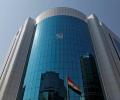
Sebi has restructured its advisory committee on market data that recommends policy measures pertaining to areas like securities market data access and privacy. Rejigging its market data advisory committee, Sebi has said the panel will now have 21 members, as per the latest information with the regulator. Earlier the committee had 20 members. The committee is chaired by M S Sahoo, Professor at National Law University, Delhi and former chairperson, Insolvency and Bankruptcy Board of India (IBBI).
India's inclusion in JP Morgan's bond index can channel billions of dollars into India. How will the government securities market handle it?

Bloomberg Markets Magazine has ranked top firms that manage money for the wealthiest.
Mergers and acquisitions (M&As) in India have moved into the slow lane, dropping 43 per cent in terms of deal value to touch $13.37 billion since January this year to date, compared to the same period in the last year. According to data sourced from Bloomberg, Indian companies reported deal value worth $23.5 billion between January and March 22, 2023. Data Infrastructure Trust's acquisition of American Tower Corporation's India telecom towers business for $2.5 billion was the top deal for the ongoing quarter so far, followed by the Highway Infrastructure Trust's acquisition of PNC Infratech's road projects for $1.08 billion.
Let's take a look at the 30 richest businesspeople.

Singapore government's sovereign wealth fund Temasek is looking to invest $10 billion in India during the next three years, Ravi Lambah, Temasek's head of India and strategic initiatives, said.

Consolidated earnings for oil-to-telecom conglomerate Reliance Industries (RIL) may report sequential weakness, and modest year-on-year (Y-o-Y) growth in the June 2024 quarter (Q1FY25), said analysts. Lower refining margins are expected to moderate gains made from other businesses. RIL is slated to report its financial performance for Q1FY25 on July 19.

Research and development (R&D) spending by BSE 100 companies has grown steadily, rising from 0.89 per cent of revenue in FY20 to 1.32 per cent in FY24, averaging around 1 per cent over the period in-between, according to data compiled from Bloomberg and company annual reports. Also, these companies more than doubled their R&D spending in absolute terms over these five years: From Rs 25,041 crore to Rs 63,072 crore. While this reflects a prioritisation of innovation, corporate R&D investment remains relatively conservative.

At a time when investors are preferring higher-risk investment products like thematic and small-cap mutual fund (MF) schemes, some fund houses are exploring the possibility of going further down the market-capitalisation (m-cap) ladder to unearth newer investment opportunities. HDFC MF had filed papers with the capital markets regulator - the Securities and Exchange Board of India (Sebi) - earlier this year for an active micro-cap scheme. Some more fund houses are keen on launching such schemes, say industry observers.

After an extremely stable 2023, the Indian rupee started 2024 on a promising note and has turned out to be the best-performing Asian currency so far in January, appreciating 0.1 per cent despite 2 per cent rise in the dollar index. All other Asian currencies depreciated by around 1.4-4 per cent during the month. The local currency regained its ground against the greenback on the back of foreign portfolio inflows, said market participants.

With India's inclusion in global bond indices starting next financial year, the central government believes there will be greater scope for shifting to borrowings via long-term government securities (G-sec) from short-term instruments. This change may be factored into the FY25 interim Budget. "While this has been our focus, the inclusion of India in global bond indices gives us the opportunity to accelerate the shift towards longer tenure G-secs," an official said, requesting anonymity.

Siemens reported solid results in the July-September quarter (fourth quarter, or Q4) of 2022-23 (FY23), with the top line growing 25 per cent year-on-year (Y-o-Y) to Rs 5,808 crore. The operating profit margin stood at 12.1 per cent, led by lower employee costs and other operating expenses. The company follows the October-September financial year.

ICICI Bank reported good results for the October-December 2023 quarter (Q3), with 24 per cent year-on-year (Y-o-Y) growth in profit after tax (PAT). Net interest margin (NIM) dropped 10 bps quarter-on-quarter (Q-o-Q) to 4.43 per cent. Credit growth was at 19 per cent Y-o-Y (4 per cent Q-o-Q), while deposit growth was at 19 per cent Y-o-Y (3 per cent Q-o-Q).

Iron ore mining major NMDC's results for the April-June quarter (Q1) of FY25 were better than estimates. Weak volumes were balanced off by higher realisations, better average selling price (ASP) and lower royalties which boosted bottomline. The revenue was in line with estimates at Rs 5,400 crore, flat year-on-year (Y-o-Y) and down 17 per cent quarter-on-quarter (Q-o-Q).

The government is busy strategising ways to revive the domestic mobile device industry as Chinese firms have grabbed a large chunk of the handset market. The idea is to minimise competition from Chinese mobile players in the entry level or sub-Rs 10,000 category, according to a senior government official familiar with the plans. While discussions on the strategy are on, there's a growing consensus within the government that the lower end of the market should be reserved only for the domestic players, the official said.

India's second richest person Gautam Adani received a total remuneration of Rs 9.26 crore in the fiscal year ended March 31, 2024, lower than most industry peers as well as his own key executives.

Brokerages are expanding the universe of stocks they cover amid a boom in the market. Several stocks in the mid-cap universe are now tracked by more analysts than they were a year ago. For instance, SBI Cards and Payment Services is now tracked by 17 brokerages, compared to just four a year ago.

Marico's January-March quarter (Q4) results were slightly better than consensus. Revenue was up by 1.7 per cent year-on-year (Y-o-Y) to Rs 2,280 crore. Ebitda grew by 12.5 per cent Y-o-Y to Rs 440 crore. Adjusted PAT was up 10.3 per cent Y-o-Y to Rs 320 crore.

FMCG major Britannia Industries' results for the January-March quarter (Q4) of the financial year 2023-24 (FY24) were received enthusiastically by the market with the share going up by 6.7 per cent on Monday to close at Rs 5,061.60 on the BSE. However, analysts said the results were in line with margins, and disappointing in terms of revenue growth. The consolidated net sales (excluding other operating income) rose 3 per cent year-on-year (Y-o-Y) to Rs 4,010 crore in Q4.

In August, domestic equity markets garnered one of the highest foreign portfolio investor (FPI) flows since the outbreak of the pandemic in 2020, despite the US Federal Reserve standing firm on unwinding its stimulus measures to control inflation. FPIs pumped in over Rs 51,000 crore ($6.4 billion) in August, the most since December 2020 and the third-highest tally since March 2020-the month the Covid-19 pandemic roiled global markets. This was the second consecutive month of positive foreign flows. In the preceding nine months, FPIs had yanked out over $32 billion or Rs 2.2 trillion.

With high credit growth and healthy asset quality, listed commercial banks are expected to report steady growth in earnings during the fourth quarter ended March 2024 (Q4 FY24). Profits are expected to grow at 9.6 per cent year-on-year (Y-o-Y) and net interest income (NII) by 8.7 per cent in Q4 FY24, according to Bloomberg analysts' estimates. According to Motilal Oswal Securities, while bank credit growth has been robust, deposit growth has also gathered pace.
 © 2026 Rediff.com - Advertise with us - Disclaimer - Privacy Policy - Sitemap - Feedback - About us - Terms of use - Grievances